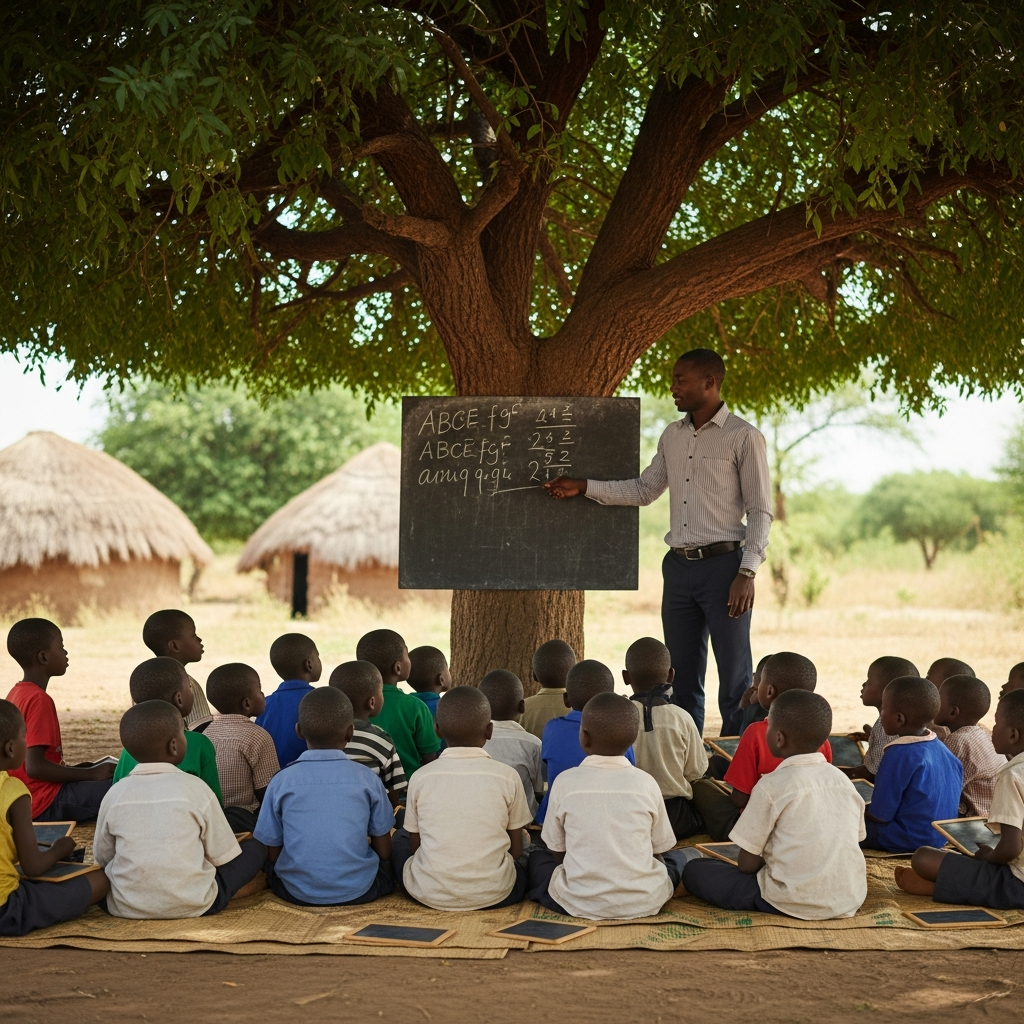
For many Baza/Kunama children, getting an education means overcoming obstacles that most students never face. In some areas, armed conflicts have damaged or destroyed school buildings, and others have been closed or taken over for other uses. Teachers and families have been forced to flee, and many children have lost months or even years of learning. As a result, in a number of communities children are now trying to learn without proper classrooms or the most basic school supplies.
Conditions differ from place to place. Where schools were destroyed or families have been displaced, lessons often take place in temporary shelters, borrowed rooms or, in some cases, outdoors. Elsewhere, pupils attend schools that are overcrowded and poorly equipped. Many children have no desks, textbooks or writing materials, and teachers, often volunteers from the community itself, work with large classes of different ages and very few resources.
The consequences reach beyond the classroom. Without a stable place to learn, children fall behind or leave school altogether, and girls are often the first to drop out. For families who have already lost so much, education remains one of the surest paths to a better future, and we cannot let that path close for a generation of Baza/Kunama children.
What BAZADA is doing
Through its Education Program, BAZADA works with local communities and the Baza/Kunama diaspora to keep children learning. BAZADA has already established reading rooms in schools, giving pupils access to books and a place to study.
How you can help
Every contribution helps a child stay in school.
Donate to BAZADA’s Education Program at bazada.org/donate.
Volunteer your skills in teaching, fundraising or logistics.
Share this story with friends and family across the diaspora.
Together, we can make sure that every Baza/Kunama child has the chance to learn.